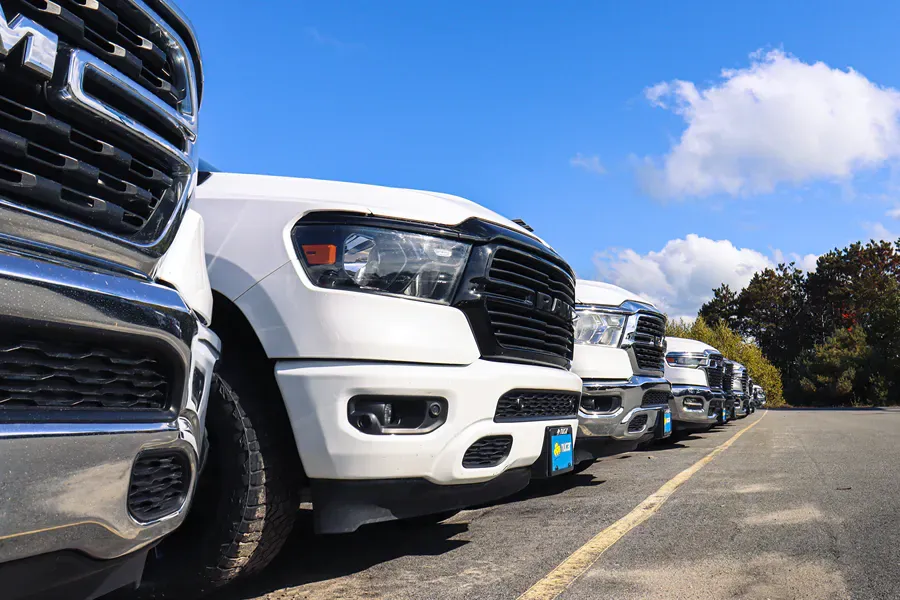
LED Headlights: The Light Source, Not the Whole Feature List
LED stands for light-emitting diode. In a vehicle description, it identifies the technology producing the light; it does not automatically mean the headlights steer into curves or manage high beams for you.
For example, the 2026 Ford Explorer ST-Line includes LED low and high beams, automatic on/off operation, and Auto High-Beam headlamps. Those are separate functions working within the same lighting setup.
When comparing a vehicle for a commute home to Norwood, look beyond the word “LED.” Check the exact trim’s equipment and how its headlights illuminate the road. A particular light-source technology alone does not guarantee better headlight performance or a particular IIHS headlight rating.
Explore new Ford vehicles to compare vehicles and their individual equipment descriptions.
Automatic Headlights and Automatic High Beams Do Different Jobs
Automatic on/off headlights help manage whether the headlights are illuminated. Automatic high beams help manage the choice between high and low beams after the appropriate operating conditions are met.
A typical high-beam-assist system can select high beams on a sufficiently dark road and return to low beams when it detects traffic ahead. The exact operation varies by vehicle, including required settings and speed thresholds.
Before an evening drive outside St. Albans, get familiar with both settings: automatic headlight operation and high-beam assistance.
Have the team demonstrate the controls and dashboard indicators. Also learn how to override the system manually. Rain, snow, fog, street lighting, or reduced camera visibility can affect automatic high-beam operation; follow the instructions for your vehicle and remain ready to select the appropriate beam yourself.
Curve-Adaptive Headlights Help Follow the Road
Curve-adaptive headlights redirect light into a turn rather than keeping the beams aimed straight ahead as the vehicle changes direction. These systems can use steering input and, depending on the design, vehicle speed to determine their operation.
One example is the Adaptive Front-lighting System on equipped 2026 Mazda CX-50 models. It adjusts the headlight beams left or right with steering-wheel operation. The 2026 CX-50 Hybrid Premium Plus includes this feature.
For winding roads beyond New Castle, curve-following capability is a useful feature to discuss during your visit.
Explore new Mazda vehicles and review the equipment on the trim you are considering.
Adaptive Driving Beams Change the Beam Pattern
Adaptive driving beams take a different approach to managing illumination around other vehicles. Instead of simply switching the entire high beam off, ADB systems selectively adjust the light pattern to reduce illumination around detected traffic while maintaining more light elsewhere.
That makes ADB distinct from both conventional automatic high beams and headlights that turn with the steering wheel.
U.S. regulations were amended in 2022 to permit compliant ADB systems. ADB availability depends on the U.S.-market model, trim, and equipment package.
Why Headlight Glare Is in the News
On October 6, 2026, NHTSA announced an effort to modernize vehicle lighting standards, including work on glare, LED technology, automatic high beams, and headlamp height and aim.
The announcement concerns work to develop updated standards. For shoppers, the equipment on the individual vehicle remains the practical guide to which lighting functions are included.
What to Check on an Evening Test Drive
An evening test drive can help you connect feature names with the controls and visibility you will use. If your routine includes errands around North Kingstown after sunset, discuss that driving pattern when arranging the visit.
Ask the team to help you review:
- The exact headlight equipment on the vehicle and trim.
- The difference between the automatic on/off setting and high-beam assistance.
- How to activate, recognize, and manually override automatic high-beam operation.
- Whether adaptive lighting means curve-following headlights, ADB, or another specified function.
- How the low beams illuminate the route during a suitable demonstration.
If you consult IIHS headlight ratings, match the rating to the applicable lighting system. A model can receive different headlight ratings when multiple systems are offered.
For a vehicle you already own, explore Nucar service if you have questions about lighting operation or a concern that needs inspection.
Find the Lighting Features That Fit Your Driving
Bring your questions to a local Nucar team and compare the specific vehicles that interest you. The Nucar Network connects shoppers with shared inventory across Nucar dealerships, giving you more options to explore.
Through Nucar Cares, we also support community organizations and initiatives. Eligible new, non-lease vehicle purchases include the 20/200 Limited Protection Plan By Nucar, subject to eligibility, maintenance requirements, and exclusions, including EVs.
Find a Nucar dealership to review equipment and arrange your next test drive. Let us help you make sense of the features you will use every day and experience why Everyone Loves A Nucar!
Nucar Limited Protection Plan available on new vehicles only (lease, commercial use, police/fire/emergency, competitive driving/racing, multiple unrelated drivers & used vehicles excluded). New EV’s are excluded from this coverage. Customers must adhere to the manufacturer’s maintenance schedule and have the vehicle serviced at Nucar dealerships, if the customer lives within 50 miles of dealership. Non-transferable. See dealer for complete details.